Biomass Projects is developing the world’s largest Carbon Dioxide Removal (CDR) project in the Pilbara region of Western Australia. Biomass Projects is partnering with the Traditional Owners through Wirrawandi Aboriginal Corporation which represents the Mardudhunera and Yaburara peoples on whose land this project will operate. The project will rehabilitate the landscape covered by the Mesquite to the native grasslands that existed prior to the infestation. Biomass Projects and Wirrawandi have secured a 15 year (plus extension options) sub-lease over Mardie Station, in order to deliver this significant carbon capture and land rehabilitation project.
At full production the Mardie Char facility will generate in excess of 500,000 CO2 removal credits (CORCs) per annum.
The feedstock for the Mardie Char project is a woody weed called Mesquite, which is a declared Weed of National Significance, and is the largest, and densest infestation of this weed in Australia. The infestation now covers more than 150,000 hectares of the 225,000-hectare pastoral lease. In the core infestation, the Mesquite now makes up more than 90% of the total biomass. Originally planted in 1926 for shade for the shearing crews on the property, the original 2 trees were considered ornamental plants and did not have the spikes for which the infestation now has a reputation.
In 1937, one of the two trees on the property was ringbarked by one of the children that lived on the station, who had been given a Tomahawk for Christmas. The remaining tree then morphed into a variety found nowhere else in the world, grew spikes that pose a significant danger to human and animals alike, and, with the seed pods highly palatable and high in protein, spread across the property mostly after the mid 1940’s.
By 2003, the infestation covered 150,000 hectares and was considered by the Western Australian State Government as “beyond eradication.” As such, the entire property was sacrificed to the Mesquite infestation, with the exception of a 1km wide ‘control and eradication zone’ on the boundary to prevent its spread. That did not work. The Mesquite now covers some 300,000 hectares in the immediate regions across 5 additional pastoral station properties, with the core infestation now the largest in Australia.
The Mesquite has decimated the local environment, destroying habitat for indigenous Flora and Fauna and has been able to do this due to some very particular traits:
1. The seed pod from the Mesquite has been a traditional food source for the Indigenous peoples of central America where it originates and is the local context, the seed pod is eaten by sheep and cattle that have been traditionally grazed on the property, as well as introduced herbivores such as camels and donkeys but also by native animals such as dingoes, emus, birds and marsupials.
2. The tree has a deep tap root that can access groundwater where it has in fact lowered the localized water table by 3 meters across the core infestation, depriving the environment of billions of litres of groundwater that local creeks and river pools are reliant on to keep the pools full in the late dry season.
3. Mesquite is also considered allelopathic in that the tree actively reduces the growth of other native plants thereby reducing competition and is likely the reason in the core infestation it makes up more than 90% of the total biomass, to the exclusion of almost all other plants other than large eucalypts that likely existed prior to the infestation which really took hold in the 1950’s.
4. Even though the original species deliberately planted on the property in 1926 did not have spikes, the mesquite has since morphed into its own variety found nowhere else on earth and has grown back the spikes on the branches which can reach up to 10 centimetres and pose a very real danger to human and livestock health from puncture wounds. In fact, the area is only able to be traversed on graded tracks as the spikes can puncture the tyres of even large earth moving equipment.
The Mardie Project aims to rehabilitate the environment back to the traditional open and lightly timbered grasslands that existed prior to the introduction of the Mesquite and, through our partnership with our Indigenous partners, manage the property to prevent the weed returning.
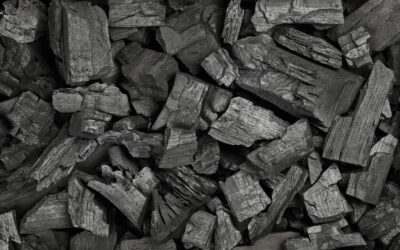
Biomass Projects, supported by its engineering partner, will convert the Mesquite biomass to char using purpose-built, high volume modern pyrolysis equipment. By owning both the feedstock (the Mesquite) and the Mardie Station lease, Biomass Projects controls the supply chain. Char produced from the facility to be constructed on Mardie will be distributed on the 225,000ha property. This reduces supply chain risk and minimises transport mileage. All activities (biomass harvest, processing and char returning to the soil) will be conducted on property.
This project presents a sustainable carbon removal opportunity which meets multiple United Nations Sustainable Development Goals, including Climate Action, Reduced Inequalities, Responsible Consumption and Production, Life Below Water, Life on Land, and Industry, Innovation and Infrastructure goals. In partnering with local First Nations members to secure the lease, manage and rehabilitate the land, Biomass Projects will not only make a substantial contribution to carbon reduction goals, but is facilitating and fostering strong social and environmental rehabilitation outcomes.
You can assist us in this important project through purchasing our Puro.earth certified CO2 Removal Credits.