We track the progress of a carbon removal project through our certification framework. This roadmap moves from a preliminary assessment of eligibility toward full certification under the Puro Standard.
The facility has successfully completed the preliminary assessment conducted by the Puro team, meeting the minimum criteria for listing as a future supplier on Puro.earth.
The facility has passed the third-party facility audit, verifying compliance with the methodology, as well as output audit, verifying the net volume of removed carbon. The facility has been issued CORCs and continues its removal operations, as well as monitoring and reporting to Puro.earth.
Development status
We monitor a facility’s maturity as it moves toward industrial-scale operations. This status identifies whether a project is in development, under construction, or actively removing carbon from the atmosphere.
The feasibility study is ongoing. The Supplier is still collecting data to prove the concept.
The front-end engineering and design are ready and methodology compliant. There is a clear plan to monitor and measure. The LCA is up to the needed quality level or subject to small improvements. The technology has been used before. There are commercial agreements with the relevant business partners of the facility.
The facility is fully funded and is being implemented. Relevant infrastructure is being built.
The facility is operating as a carbon removal facility.
information
More about ProtoChar01
Industrial Carbon Removal. Rooted in Agriculture.
AtlantiCO2 builds carbon removal infrastructure where biomass supply and soil vulnerability intersect. By embedding continuous biochar production alongside farmers and agroindustrial partners, we transform residual biomass into permanent carbon storage, restore degraded soils, and establish a new standard for scalable climate infrastructure across agricultural systems.
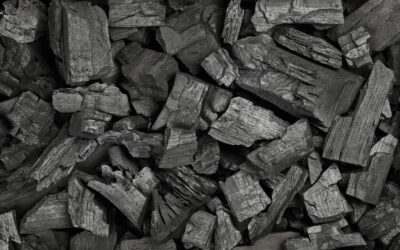
AtlantiCO2’s first facility, ProtoChar01, establishes the company’s operating blueprint for industrial carbon removal embedded in agriculture. Co located with its engineering partner OBY Industrial and built around continuous pyrolysis technology, the plant processes FSC certified sawdust at industrial scale. Residual biomass that would otherwise decompose or be inefficiently burned is converted into high stability biochar, generating high integrity, permanent carbon removal credits alongside bio oil and clean energy co products. The facility is designed for precise temperature control, operational flexibility, and energy self sufficiency, ensuring consistent carbon quality and reliability. Biochar is then deployed into agricultural systems, where it contributes to soil restoration while delivering durable carbon storage. ProtoChar01 demonstrates not only technical feasibility, but commercial viability through structured carbon offtake relationships and integration into global CDR markets.
About AtlantiCO2: AtlantiCO2 scales by replicating this modular infrastructure model across Brazil’s major biomass corridors. The company identifies high density agroindustrial hubs where abundant residues intersect with regions of soil depletion and agricultural intensity. Each new site is structured through a special purpose vehicle under AtlantiCO2 management, while centralized shared services oversee engineering, carbon accounting, commercial sales, and project development. Brazil’s vast agricultural and forestry residue base provides feedstock diversity and supply security, while the biomass agnostic technology allows rapid adaptation to different material streams. With a structured expansion plan toward ten plants by 2030 and an objective of removing one megaton of CO2e yearly, growth is driven by repeatable plant deployment, strong access to large biomass producers, and a growing commercial pipeline connected to international carbon buyers.
Join us. AtlantiCO2 is building the infrastructure required to scale permanent carbon removal across the Global South. We are seeking strategic partners and investors ready to accelerate deployment, expand our plant network, and confront two defining challenges of this century: removing carbon at scale and restoring the productivity and resilience of agricultural systems.
The project is expected to deliver several co-benefits, including SDG12 responsible consumption, SDG2 improved land productivity, SDG8 decent work, SDG7 improved energy efficiency, which have been qualitatively described.
SDGs
Sustainable development goals
Only listed sustainable development goals (SDGs) have been assessed according to the Puro standard SDG Assessment Requirements and validated and verified by a VVB.
Take urgent action to combat climate change and its impacts
Puro.earth provides the institutional-grade infrastructure and global ecosystem required to navigate an evolving industry with confidence. Through rigorous standards,…