Trusted infrastructure for Agricultural Carbon Intensity
Track carbon intensity from the field where a commodity was grown through the agricultural supply chain.
As an initial application, Puro.earth’s Environmental Attributes Registry will help suppliers make lower-CI agricultural production visible and buyer-ready, while giving buyers stronger evidence to source with confidence.
Agricultural Carbon Intensity will be the first environmental attribute tracked by the Puro.earth Environmental Attributes Registry, with additional environmental attribute verticals to follow in 2027. Environmental attribute instruments or certificates are distinct from CO₂ Removal Certificates, or CORCs, and do not represent carbon removal.

agricultural carbon intensity
See where carbon intensity begins
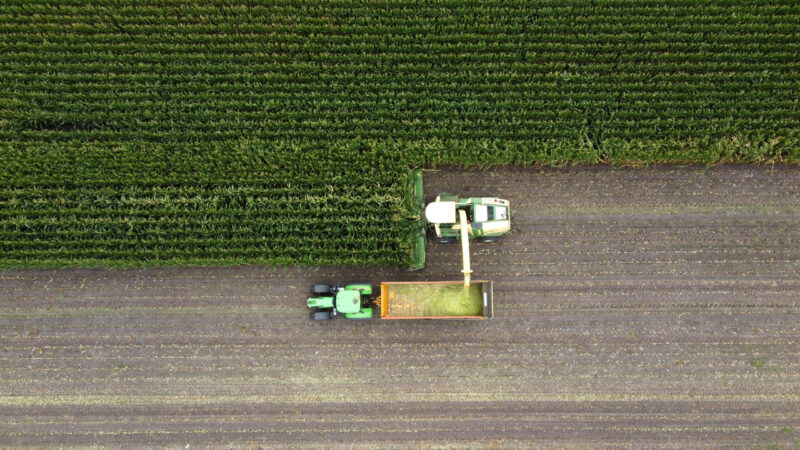
How a crop is grown shapes its carbon intensity. But that information can disappear as commodities are aggregated, processed and traded through complex agricultural supply chains.
The Puro Environmental Attributes Registry keeps methodology-based CI information connected to the field or farm of origin and the relevant commodity, helping make lower-CI performance visible and commercially useful.
Start at the source

Link the CI score to a defined commodity and the field or farm where it was produced.
Follow it through the chain

The registry records the connection as the commodity moves through agribusinesses, processors and buyers.
Use it with confidence

Geospatial boundaries are designed to reduce the risk of double counting across different environmental attributes and claims.
from field to buyer
Keep the attribute connected
The first application will support agricultural commodities supplying clean-fuel production, including the market created by the US 45Z Clean Fuel Production Credit.
Puro.earth provides registry and assurance infrastructure.
The applicable methodology defines the data, calculations and boundaries used to determine the carbon intensity of the agricultural commodity.
The CI attribute is connected to a defined commodity quantity, field or farm of origin, production period and relevant geospatial records.
Registry records maintain the connection between the attribute, commodity and ownership as the commodity moves through the supply chain.
registry
One Registry. Value for both sides of the market.
See the CI behind the commodities you buy

Use source-specific, traceable CI information to identify lower-CI agricultural supply, structure supplier programmes and support more defensible sourcing decisions.
- Move beyond broad industry averages.
- Trace CI from the field or farm to the commodity purchased.
- Give procurement and sustainability teams clearer evidence.
- Create stronger incentives for lower-CI production.
Make lower-CI supply market-ready

Structure and scale an Agricultural CI programme across farms and commodity flows, and give buyers consistent evidence through trusted registry infrastructure.
- Connect field-level data to defined commodity quantities.
- Apply consistent requirements across dispersed supply networks.
- Make lower-CI production visible and differentiable.
- Respond to clean-fuel and corporate sourcing demand.
why Puro.earth
Proven infrastructure for a distinct asset class
Puro.earth has built the governance, registry and operational capabilities required to turn complex climate evidence into transparent, traceable market assets.
The Environmental Attributes Registry extends those capabilities into environmental attributes while remaining separate from Puro.earth’s carbon-removal programme.
Proven registry infrastructure

Structured records connect the attribute to its methodology, origin, commodity quantity and ownership.
Clear asset boundaries

Ringfenced programs and tracking rules keep Agricultural CI instruments separate from CORCs and other environmental claims.
Nasdaq-backed stability

Institutional-grade infrastructure and governance provide continuity and confidence as the market develops.

products
One infrastructure. Distinct assets.
Customers will benefit from one integrated digital suite supporting both CDR and CI activities while keeping the assets and claims entirely separate.
-
Agricultural CI EACs
represent a defined environmental attribute associated with a tracked quantity of agricultural commodity.
-

CORCs
represent verified durable carbon removal.
register your Agriculture Program
Register your interest
Puro.earth is launching its Environmental Attributes Registry, starting with Agricultural Carbon Intensity.
Tell us whether you are looking to make lower-CI agricultural supply market-ready, source it with stronger evidence or explore a partnership
Environmental Attributes & Carbon Intensity FAQs
You have questions,
we have answers.
Verified, traceable, timestamped farm-level CI data, supported by independent audit and third-party (VVB) checks. This means data demonstrating the origin geography and crop year, the methodology and version applied, the CI score, the independent verification record, the chain-of-custody and volume reconciliation, and the full registry history of issuance, transfer and allocation.
Because it is held in one registry rather than across supplier spreadsheets, the same evidence can be used for procurement decisions, sustainability reporting and external assurance – with a clear statement of what may and may not be claimed alongside it.
We will support multiple LCA models, of which clean-fuel production under 45Z is one initial use case and example. The same infrastructure will be readily extendable to corporate Scope 3 reporting for agricultural supply chains and, over time, to soil carbon. Each framework determines its own eligibility rules and what may be claimed; the Registry supplies the verified, traceable evidence base.
For 45Z, the farm-level carbon intensity of the feedstock is a direct input into the fuel’s emissions rate. For Scope 3, primary supplier-specific data is what allows a buyer to move off industry averages under CSRD reporting and SBTi’s FLAG guidance. Puro.earth does not award tax credits, and does not guarantee acceptance under any third-party framework.
The intent is one well-measured dataset that can serve a 45Z claim – more akin to investment-grade financial data than to another reporting layer.
The Registry runs as a distinct, ringfenced vertical within Puro.earth’s infrastructure, with its own definitions, claims boundaries and records, and is kept clearly apart from CORCs in all external communications.
By applying the same rigorous, transparent approach already used to track CORC issuance through the Puro Registry, and by defining clear tracking boundaries for every commodity. Each attribute is issued once against a defined quantity from a defined origin, and geospatial field-level records mean the same field and harvest cannot quietly be enrolled twice.
Allocation and retirement events are recorded, so an attribute follows a single claim rather than being counted by several parties. The boundaries themselves keep CI claims distinct from carbon credits and removal claims, and from attributes issued into other registries or programmes.
In defined stages – origination at field level, aggregation through elevators and processors under set chain-of-custody and mass balance rules, issuance of the record in the Registry, then transfer and allocation to the buyer. Each step is timestamped and auditable.
The physical commodity flow and the certificate record are related but distinct – the Registry is the record of which attribute, from which origin, has been allocated to which party for which volume. That is what allows a buyer to point to a specific, verifiable claim rather than a supplier assurance.
Agriculture is where the largest share of buyers’ unmeasured emissions sits, and it is where we felt we could be most additive. That conclusion followed a review of several adjacencies to carbon removal, assessing where independent, verified CI data would add genuine value rather than duplicate infrastructure that already exists. For materials such as steel and cement, EU product methodologies already prescribe how carbon intensity is calculated. Agriculture remains genuinely underserved, while agricultural CI can be attached directly to the physical commodity rather than sold separately as a decoupled certificate.
Clean fuels are the most immediate, highest-volume application. A biofuel’s carbon intensity is largely set on the farm, and under Section 45Z a lower CI converts directly into a larger per-gallon credit – up to $1 per gallon – against operable US biofuel capacity of around 25.28 billion gallons a year.
Our ambition is to eventually apply his approach across multiple applications, such as Scope 3 reporting and, over time, to soil carbon, water and biodiversity.
Each attribute is tied to the field and farm where the crop was grown – mapped boundaries, crop year and commodity volume – using MillPont’s METI platform, and then to the verified CI score calculated for that production.
The Registry record holds origin, methodology, attribute and commodity quantity together, so the connection between a bushel of grain and the way it was actually farmed persists as it moves from field to farm to agribusiness to end buyer.
The supplier calculates it against the applicable methodology, using its own farm-level data. Puro.earth assesses and attests that the methodology has been implemented correctly, and records the resulting attribute in the Registry; implementation is subject to independent audit, including farm-level checks by third-party Validation and Verification Bodies (VVBs).
The inputs reflect how the crop was actually grown – tillage practice, cover cropping, nutrient and fertiliser management, energy use and other methodology inputs. Because the score is modelled on measured inputs rather than an industry average, it captures the real spread between high- and low-carbon producers of the same crop. The result is expressed as an intensity score for a defined quantity of commodity, not an absolute reduction.
We will support multiple LCA models, of which the 45Z model is one; for clean fuels, the farm-level CI of the feedstock is a direct input into the fuel’s emissions rate. Puro.earth does not calculate the score itself and does not award any tax credit.
The carbon intensity of a specific agricultural commodity at farm and field level – the carbon emissions associated with producing it, calculated under a defined methodology and expressed as an intensity score rather than an absolute reduction.
It reflects how a crop was grown – including tillage practice, cover cropping, nutrient and fertiliser management, energy use and other methodology inputs. Because it is modelled on measured inputs rather than an industry average, it shows the real spread between high- and low-carbon producers of the same crop – which is precisely the variation that averaged emission factors hide.
The supplier calculates the score against the applicable methodology, using its own farm-level data.
Puro.earth’s role is to assess and attest that the methodology has been implemented correctly, and to record the resulting attribute in the Registry. Implementation is subject to independent audit, including farm-level checks by third-party Validation and Verification Bodies (VVBs), so that claims on the platform are comparable regardless of which farm they originated from. Puro.earth does not calculate the score itself and does not award any tax credit.
They are a wholly separate asset class. A CO₂ Removal Certificate (CORC) represents one tonne of CO₂ durably removed from the atmosphere and stored for at least 100 years under the Puro Standard.
An Agricultural CI Environmental Attribute Certificate (EAC) represents a verified carbon-intensity score attached to a defined quantity of a tracked commodity. It is an intensity measure of how much carbon was used to produce an asset – not a tonne removed, and not a carbon credit.
The two run on the same Nasdaq-owned registry infrastructure, governance and rigour, but environmental attributes are not a variant of, successor to, or otherwise linked to CORCs. They sit in a distinct, ringfenced vertical with their own definitions, claims boundaries and records.
Because the data measuring environmental attributes exists in pockets, while the infrastructure to make it comparable, traceable and defensible does not.
Take agricultural carbon intensity as an example. Buyers need primary, farm-level CI data they can stand behind; suppliers need a way to turn lower-CI production into something a buyer will recognise and pay for. That calls for neutral registry infrastructure, independent assurance and clear claims boundaries — precisely what Puro.earth already operates for engineered carbon removal.
insights