- Certify carbon credits
- CDR Supplier facilities
Carbon Yards HCO2 Mississippi
By Ecological Carbon Offset Partners LLC
project milestones
Certification journey
We track the progress of a carbon removal project through our certification framework. This roadmap moves from a preliminary assessment of eligibility toward full certification under the Puro Standard.
The facility has successfully completed the preliminary assessment conducted by the Puro team, meeting the minimum criteria for listing as a future supplier on Puro.earth.
The facility has passed the third-party facility audit, verifying compliance with the methodology, as well as output audit, verifying the net volume of removed carbon. The facility has been issued CORCs and continues its removal operations, as well as monitoring and reporting to Puro.earth.
Development status
We monitor a facility’s maturity as it moves toward industrial-scale operations. This status identifies whether a project is in development, under construction, or actively removing carbon from the atmosphere.
The feasibility study is ongoing. The Supplier is still collecting data to prove the concept.
The front-end engineering and design are ready and methodology compliant. There is a clear plan to monitor and measure. The LCA is up to the needed quality level or subject to small improvements. The technology has been used before. There are commercial agreements with the relevant business partners of the facility.
The facility is fully funded and is being implemented. Relevant infrastructure is being built.
The facility is operating as a carbon removal facility.
information
More about Carbon Yards HCO2 Mississippi
The Project:
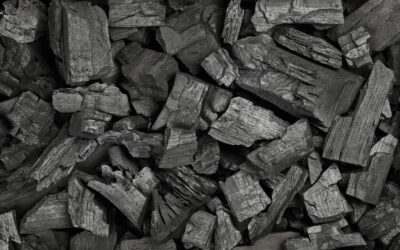
Carbon Yards HCO2 Mississippi is developed by EP Carbon to convert low-grade forest residues and pulpwood, materials that would otherwise be burned or left to decay, into a durable and verifiable form of long-term carbon removal. By unlocking the economics of forest restoration and management at scale, Carbon Yards generates highly durable and additional carbon removal credits at a very low cost, making high-integrity carbon dioxide removal accessible to a broader range of corporate buyers.
The Problem We Solve:
Shifting timber markets and the chronic oversupply of low-grade fiber across the U.S. Southeast have left millions of tons of low-value biomass with no viable economic destination and distressed forest assets untreated. Non-merchantable residues generated during thinning and restoration treatments have no commercial outlet and are typically burned on-site or left to decay, while pulpwood markets are chronically oversupplied, leaving harvested material underutilized. This lack of viable end markets limits the economic feasibility of practices such as selective thinning and fuel reduction, causing compounding forest health and rural livelihood problems. By creating a permanent, traceable end-use pathway for both material types, Carbon Yards transforms what is currently a waste stream or stranded commodity into a long-lived carbon storage asset that supports durable removals and healthier forests.
This model delivers immediate additionality by capturing and storing carbon that would otherwise be released to the atmosphere under business-as-usual conditions, while also enabling sustainable forest management practices that enhance forest growth and long-term sequestration on certified forestlands that would not otherwise occur. Together, these activities provide a dual source of additionality, and the engineered storage system ensures permanence by preventing re-emission of stored carbon for centuries. By combining these elements, Carbon Yards creates a complete and verifiable carbon removal outcome that unites avoided emissions, enhanced forest sequestration, and durable storage, resolving the long-standing challenge of coupling additionality with permanence in nature-based solutions.
How It Works:
The facility is located on a former gravel pit in Forrest County, Mississippi. Feedstock is sourced from certified forestry operations within a 90-mile radius, encompassing more than 16 million acres of managed forest land. Upon delivery, woodchips are treated on-site with a dry halite mixture that suppresses microbial activity through osmotic stress. The treated biomass is assembled into triangular prism-shaped stockpiles enclosed under fire-retardant, solar-reflective polyethylene covers, with apex vents positioned every 20 feet maintaining passive airflow and dry oxic conditions that prevent decomposition for more than 100 years. Each chamber is continuously monitored through sensors measuring temperature, relative humidity, carbon dioxide, and methane in real time, with all data managed through a centralized digital platform providing auditable records throughout the storage period.
Scale and Replicability:
Once fully operational, the facility will store approximately 187,500 green tons of biomass per year across 227 storage chambers on a 140-acre site, delivering a total of 532,134 tonnes of CO₂ removal over the project's crediting period. The model is designed to be modular and replicable, with plans to expand across the U.S. Southeast and the potential to scale wherever forest restoration treatments are needed and low-value biomass or pulpwood are oversupplied. As a U.S.-based initiative, the project offers buyers additional procurement certainty by avoiding Article 6-related delivery risk.
About EP Carbon
Ecological Carbon Offset Partners LLC (EP Carbon) is a U.S.-based carbon project developer and technical services partner with 15 years of experience, more than 69 projects, and 115 feasibility studies completed across carbon markets worldwide. The company designs, develops, and brings nature-based and engineered carbon projects to market under internationally recognized standards, partnering with forest owners, NGOs, and communities across Latin America, South Asia, Africa, and North America. EP Carbon created Forest Carbon Works, the leading aggregator for Improved Forest Management among U.S.-based smallholders, and its CEO, Dr. Kyle Holland, co-founded Chestnut Carbon with Kimmeridge private equity

The Carbon Yards project generates significant environmental, social, and economic co-benefits alongside durable carbon removal. By creating a long-term market for low-grade woody biomass and forestry residues that would otherwise be burned or left to decompose, the project strengthens sustainable forest management, supports rural economies, enhances ecosystem resilience, and promotes transparent governance.
Driving Rural Economic Renewal:
The project promotes local employment through construction, biomass handling, logistics, monitoring, and facility operations while prioritizing local hiring, procurement, and workforce training. These activities strengthen rural economies and develop long-term technical capacity, contributing to SDG 8 (Decent Work and Economic Growth).
Improved Livelihoods:
By purchasing certified low-value fiber and forestry residues, the project improves the financial viability of sustainable forest management and provides additional revenue opportunities for landowners, forest managers, and contractors. Through responsible sourcing, traceability, and certified supply chains, the project supports SDG 15 (Life on Land) and SDG 16 (Peace, Justice and Strong Institutions).
Unlocking Restoration at Scale:
The project also unlocks forest restoration at scale by making selective thinning and removal of excess woody biomass economically viable. These practices improve forest structure, promote natural regeneration, enhance biodiversity, reduce soil erosion, improve water infiltration, and strengthen watershed function, contributing to SDG 6 (Clean Water and Sanitation) and SDG 15 (Life on Land).
Reduced Wildfire Risk:
Removing excess woody fuels further reduces wildfire risk, protecting nearby communities, maintaining ecosystem integrity, and preserving forest carbon stocks while increasing climate resilience. These outcomes contribute to SDG 13 (Climate Action) and SDG 15 (Life on Land).
Governance, Transparency and Social Inclusion:
Carbon Yards also promotes transparent and inclusive governance through stakeholder engagement, public disclosure of project information, and accessible grievance mechanisms, strengthening accountability and community participation in line with SDG 16 (Peace, Justice and Strong Institutions).
Together, these activities create lasting environmental, economic, and social value across the project's sourcing landscape.
SDGs
Sustainable development goals
Only listed sustainable development goals (SDGs) have been assessed according to the Puro standard SDG Assessment Requirements and validated and verified by a VVB.
Take urgent action to combat climate change and its impacts
Contact Ecological Carbon Offset Partners LLC
related content
More about our CDR infrastructure
- Demand
Buy carbon credits
Puro.earth provides the institutional-grade infrastructure and global ecosystem required to navigate an evolving industry with confidence. Through rigorous standards,…
- Supply
Certify carbon credits
As your certification partner, Puro.earth provides the trusted standards, global ecosystem, and digital tools needed to unlock capital and…
- Infrastructure
Infrastructure
Puro.earth provides the rigorous standards, transparent registry, and digital tools required to turn durable carbon removal into a tangible,…