We track the progress of a carbon removal project through our certification framework. This roadmap moves from a preliminary assessment of eligibility toward full certification under the Puro Standard.
The facility has successfully completed the preliminary assessment conducted by the Puro team, meeting the minimum criteria for listing as a future supplier on Puro.earth.
The facility has passed the third-party facility audit, verifying compliance with the methodology, as well as output audit, verifying the net volume of removed carbon. The facility has been issued CORCs and continues its removal operations, as well as monitoring and reporting to Puro.earth.
Development status
We monitor a facility’s maturity as it moves toward industrial-scale operations. This status identifies whether a project is in development, under construction, or actively removing carbon from the atmosphere.
The feasibility study is ongoing. The Supplier is still collecting data to prove the concept.
The front-end engineering and design are ready and methodology compliant. There is a clear plan to monitor and measure. The LCA is up to the needed quality level or subject to small improvements. The technology has been used before. There are commercial agreements with the relevant business partners of the facility.
The facility is fully funded and is being implemented. Relevant infrastructure is being built.
The facility is operating as a carbon removal facility.
information
More about Nellie Mwyndy Cross
Nellie is a UK-based company, focused on delivering bio-engineered carbon dioxide removal at a meaningful scale. Its approach centres on converting atmospheric CO₂ into a physically stable solid form, enabling durable carbon storage rather than short-cycle biological sequestration. The company develops and deploys systems that integrate biological CO₂ removal with thermochemical conversion into stable carbon products, forming a complete removal pathway from the atmosphere to long-term sequestration. The project is designed and operated as carbon removal infrastructure, with clearly defined system boundaries suitable for monitoring and third-party verification.
Integrated carbon removal pathway:
At Nellie’s site in Mwyndy Cross, South Wales, the company operates a modular, scalable CDR system that uses enclosed photobioreactor (PBR) arrays to cultivate microalgal biomass. As the microalgae grow, they remove CO₂ from ambient air inputs through photosynthesis, fixing atmospheric carbon into organic biomass. Proprietary innovations in photonics and reactor design allow the system to achieve high biomass productivity within a controlled, closed loop, enabling traceability and consistency in feedstock quality. This controlled cultivation approach avoids reliance on heterogeneous external biomass supply chains and reduces exposure to land-use and sourcing variability.
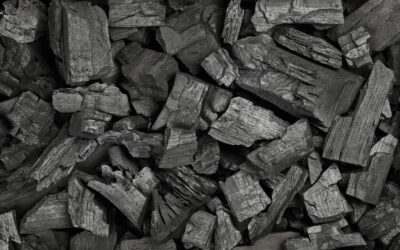
Once harvested, the biomass is dehydrated and processed via pyrolysis (controlled heating without combustion) to create PhycoChar®, a stable carbon-rich solid that sequesters carbon for centuries when applied to soil, contributing to circular economy outcomes. The durability of storage is intrinsic to the material itself, with carbon stabilised through thermochemical conversion rather than dependent on ongoing biological conditions.
Technology characteristics and deployment model:
Nellie’s carbon removal systems are designed as modular, scalable, self-contained units, rather than bespoke, site-specific facilities. Each unit integrates biomass cultivation, conversion, and carbon storage preparation within a defined system boundary. This modular architecture allows new deployments to replicate a proven configuration, rather than redesigning the carbon removal pathway for each site. As capacity increases, removals are generated by adding identical units rather than expanding a single complex facility, supporting predictable performance over time.
This approach supports consistency across facilities: the same capture mechanism, the same conversion process, and the same storage outcome can be applied repeatedly as capacity scales. This reduces project-specific variability and enables removals to be assessed against a stable reference design, rather than a series of one-off implementations. This repeatability reduces execution risk and simplifies long-term assessment as volumes grow.
Position in the broader climate landscape:
Nellie’s holistic CDR model, combining engineered biomass growth, controlled pyrolysis, and robust verification, reflects emerging best practices in the carbon removal domain: traceable feedstock, controlled process boundaries, and durable storage outcomes. Operational inputs and outputs are measured at the facility level to support transparent carbon accounting under third-party standards.
Nellie’s carbon dioxide removal operations are designed to deliver measurable co-benefits alongside durable carbon storage, contributing to environmental regeneration, agricultural resilience, and socio-economic value within the United Kingdom.
The Mwyndy Cross facility is located within a post-industrial landscape in South Wales, an area historically shaped by heavy industry and associated land degradation. By siting operations on previously industrial land, the project supports productive land reuse and avoids competition with agricultural or conservation land. The deployment of controlled biological systems and contained thermochemical processing creates opportunities for gradual site regeneration and environmental improvement, including bioremediation potential through soil amendment and improved land stewardship practices.
The biochar produced, PhycoChar®, has a mineral-rich nutrient profile that is well suited to UK agricultural soils. When applied as a soil amendment, biochar can improve soil structure, enhance water retention, and support nutrient availability, contributing to more resilient farming systems under increasingly variable climate conditions. These soil benefits are achieved alongside permanent carbon storage, linking climate mitigation directly to agricultural value chains without reliance on imported inputs.
From a socio-economic perspective, Nellie’s operations support skilled employment in clean technology, engineering, and environmental monitoring within a region undergoing economic transition. The modular nature of the technology enables replication across similar UK sites, creating pathways for distributed job creation and local supply chain engagement as capacity scales.
By integrating carbon removal infrastructure with agricultural and regional development objectives, the project demonstrates how engineered CDR systems can deliver broader environmental and social value while maintaining clear system boundaries, traceability, and verification suitable for long-term climate mitigation.
SDGs
Sustainable development goals
Only listed sustainable development goals (SDGs) have been assessed according to the Puro standard SDG Assessment Requirements and validated and verified by a VVB.
Take urgent action to combat climate change and its impacts
Puro.earth provides the institutional-grade infrastructure and global ecosystem required to navigate an evolving industry with confidence. Through rigorous standards,…