

Talking about CDR delivery at New York Climate Week

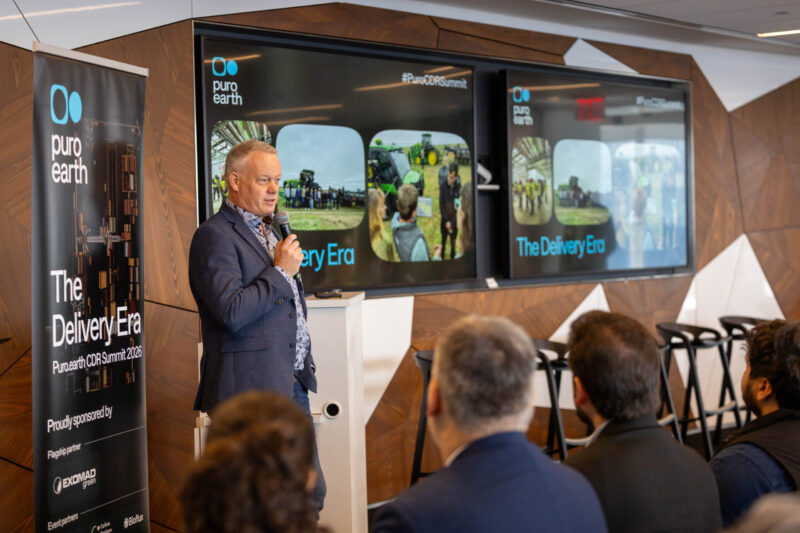
Last week, developers, buyers, financiers and policymakers came together in New York for the Puro.earth CDR Summit 2026.
Across a full day of panels, showcases and announcements, the conversation kept coming back to one theme: delivery. Who is building, who is financing, who is buying, and what it takes to do all of that at scale.
That’s a big change. Two or three years ago, talking about engineered removals was still largely about possibilities: what could be built, where demand might come from and what the market could eventually become.
Today, we have the numbers to support a different conversation – one that is focused more squarely on execution. The number of companies retiring removal credits rose 374% between 2020 and 2025, and first-time buyers rose 228%. Our registry passed one million CORC retirements this year. We expect to issue around 1.1 million tonnes in 2026, rising to around 1.9 million in 2027.
What was particularly impressive was the optimism in the room, grounded in evidence of delivery, rather than ambition alone. That came through in what our speakers said and in the announcements made throughout the day. Four things stood out to me most.
Industrial-scale supply is expanding
The clearest sign of a maturing market is who is entering it, and there were two announcements that stood out to me as a sign of things to come.
During a panel, ADM announced its entry into the voluntary carbon removal market, drawing on more than 800,000 tonnes of annual carbon capture capacity at its corn processing complex in Columbus, Nebraska. The first issuance is underway and is being certified by Puro.earth.
Robinson Carbon, part of the 133-year-old Robinson Lumber, confirmed its Red River biochar plant in Louisiana. Phase one will convert around 100,000 tonnes of wood waste a year into biochar, and, upon completion of its certification, could generate approximately 40,000 CO2 Removal Certificates (CORCs) per year.
These projects come from established industrial operators, and they show that CDR is becoming part of how legacy industries think about their assets and revenue.
Delivery also depends on doing it right – and being able to prove it. Exomad Green, which has already delivered more than 440,000 credits and contracted more than 2.5 million tonnes, demonstrated its approach to sourcing biomass sustainably. It showed attendees how it maps where its sustainably-sourced feedstock comes from, tracks individual loads back to their origin, and monitors sourcing areas against satellite imagery every week for signs of forest loss and degradation through a dedicated monitoring team. As volumes grow, that level of traceability is essential for the industry to scale with trust. It was encouraging to see this treated as a core operational capability rather than a compliance afterthought.
The institutionalisation of CDR finance and risk management
Our panel on making CDR bankable brought together Societe Generale and Marsh alongside ADM. A few years ago, having a bank and a global insurer on stage talking about CDR financing would have been rare. Now the discussion has turned more sophisticated and detailed, looking at how risk is priced, transferred and managed across the project lifecycle, and how the investment case holds up.
The day also produced a concrete example. Applied Carbon and Kumo announced on stage the first outcome bond for engineered carbon removal to finance Applied Carbon’s biochar projects in the US. It is principal-protected, non-recourse and non-dilutive, and was structured by a major global bank. This is something genuinely new and exciting, with clear comparisons to how established industries are financed.
Offtake-backed borrowing, floor-price mechanisms, outcome bonds and insurance products are the hallmarks of a market that behaves like an investment-grade asset class. They also bring discipline – capital asks harder questions about quality, and that raises the bar for everyone.
Governments are building CDR into industrial strategy
We opened the day with governments, and that was a deliberate choice to understand how they are looking to support CDR delivery. The Vice Minister of Environment, Biodiversity, Climate Change and Forest Management of Bolivia, Jorge Ernesto Ávila Antelo, and Eduardo Bastos, President of the Agrocarbon Chamber under Brazil’s Ministry of Agriculture, described how they are treating carbon removal as part of their domestic economic and agricultural strategy, in addition to an export commodity.
Eduardo Bastos spoke to a recent example of where it is looking to embed CDR, noting that the Brazilian government has now approved adding biochar, enhanced rock weathering, BECCS and soil organic carbon to its Low-Carbon Agriculture (ABC) Plan. That extends subsidised finance to farmers using these methods, with estimated removal potential of more than 500 million tonnes this decade. It’s a model of how CDR can sit alongside land restoration, food production and rural income rather than competing with them.
Bolivia is taking a similar path, building a climate investment framework designed to give developers, including carbon removal projects, the certainty they need to invest. Vice Minister Ávila described the Framework Law for Climate and Biodiversity Finance, now in the final stages of legislative approval, as a turning point for the country. It will create a national agency to register projects, ensure compliance and provide technical support, alongside a national carbon registry and a high-level governance body to provide transparency, equal participation and strategic oversight. Clear institutions like these are what give developers and buyers the confidence to commit.
Buyers are becoming more sophisticated and confident
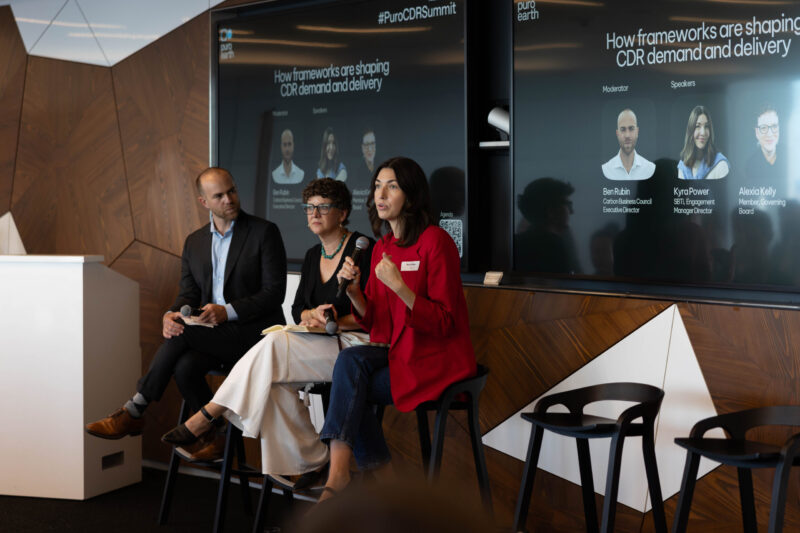
Kyra Power of SBTi and Alexia Kelly of ICVCM talked us through the frameworks that increasingly guide corporate procurement.
Kyra was candid about why SBTi kept its new Ongoing Emissions Responsibility framework voluntary until 2035: buyers said 2030 wasn’t feasible. But the signal underneath matters more. SBTi has received around 1,300 questions about its optional recognition programme, and leading companies appear to be treating the voluntary period as a chance to build experience with high-integrity removals before requirements take hold. Alongside the CRCF in Europe and Article 6, frameworks like these are giving buyers the confidence to commit earlier and for longer.
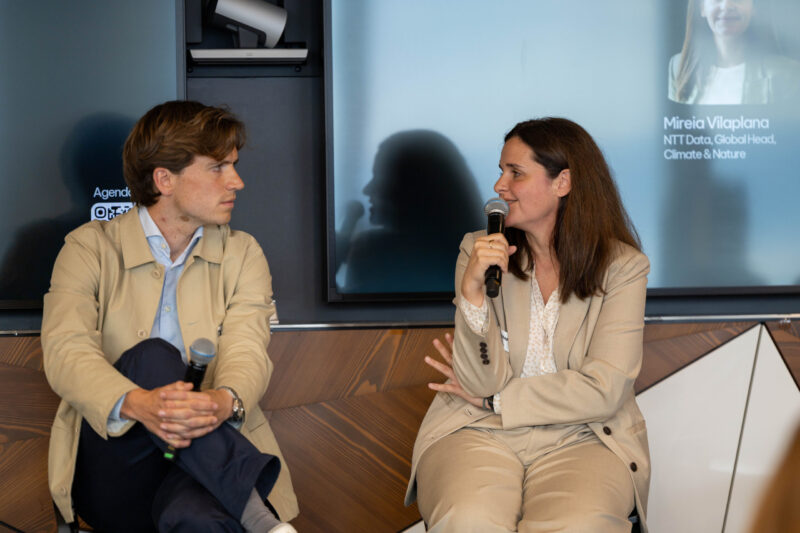
We then heard from buyers themselves. Our panel with Frontier, BMO and BCG, and our keynote with NTT Data and Climeworks Solutions, showed how much the buyer base has broadened, from early adopters to banks, consultancies and enterprise-scale infrastructure buyers addressing emissions from data-centre growth.
It was also a refreshingly honest conversation. Our buyer panel spoke openly about approaches that haven’t worked. I see that as a sign of strength. A mature market is one where buyers know what good looks like, say plainly when something falls short, and direct capital to what delivers.
What comes next
We shouldn’t overstate where we are. Today’s volumes are still modest against the scale of the climate challenge, and demand remains the market’s biggest constraint. But the building blocks are clearly in place – industrial-scale supply, institutional finance, supportive policy forming and more sophisticated and increasingly confident buyers.
What I took away from New York is that these pieces are no longer developing separately. They are starting to reinforce each other, and that is what delivery looks like.
My thanks to all our speakers and to everyone who spent the day with us. See you next year.



Join our community of climate pioneers
Join our community of climate leaders
Receive updates from Puro.earth, along with CDR market updates and intelligence. By subscribing, you agree to Puro.earth’s privacy policy.