

How a trip to Bolivia helped to answer some of the hard questions about biochar
Every time I talk about biochar at a conference or in an interview, I get asked some version of the same set of questions. Is the biomass actually sustainable? Does the carbon really stay locked in the soil? What’s the impact on communities beyond the numbers in a methodology? Are you sure this scales?
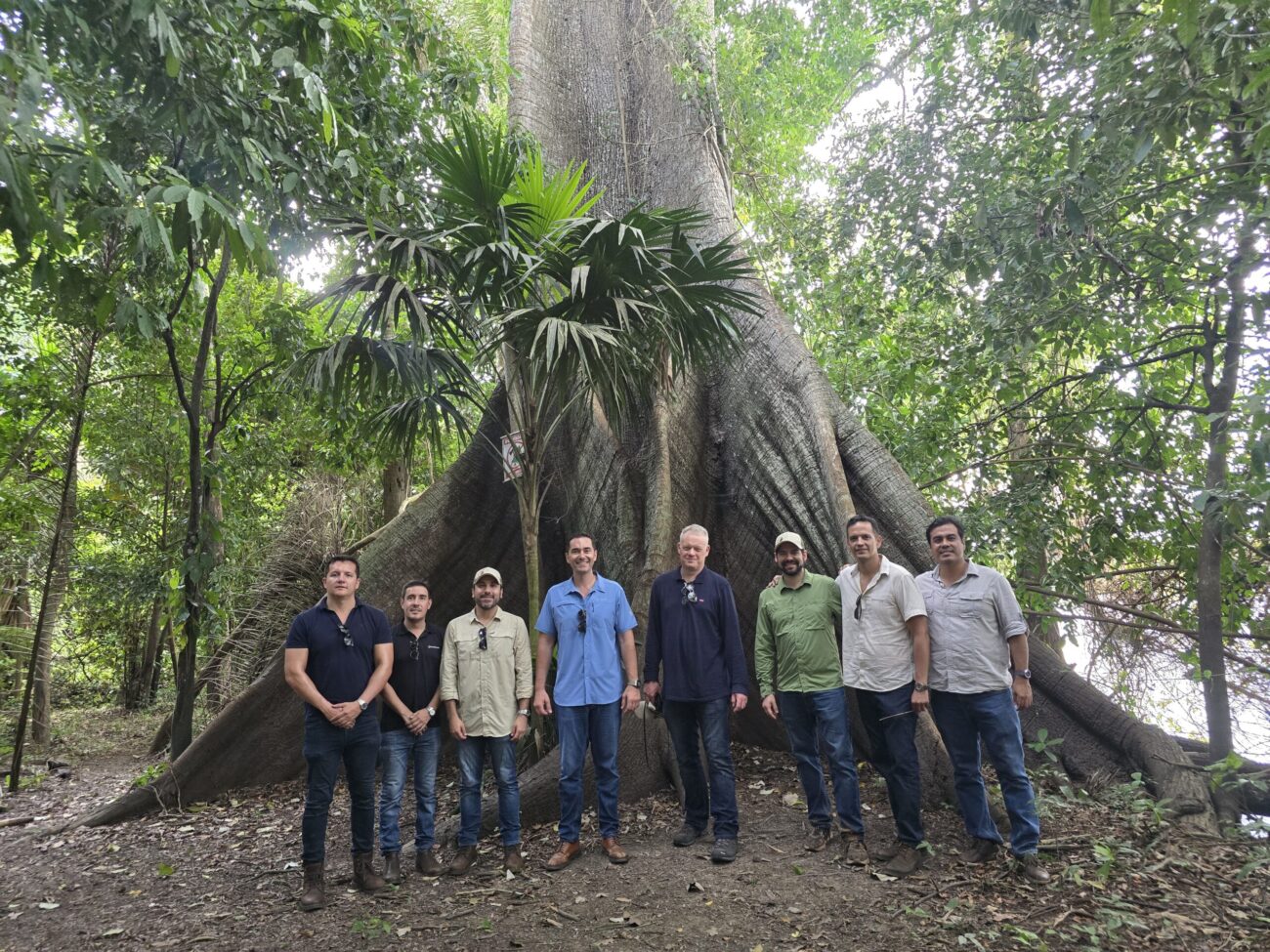
These are the right questions. They are the questions a serious market should be asking. And I want to try to answer them honestly – not from a desk, but from what I actually saw when I spent six days in Bolivia visiting Exomad Green’s operations across Concepción, Riberalta and Guarayos.
Because going to see something for yourself changes how you answer these questions. Not because the answers get easier, but because they get more real.
A short video detailing JW’s visit
The Biomass question: is the feedstock really waste?
This is probably the question I hear most often, and it is a fair one. The carbon credit value of a biochar project depends on what would have happened to the biomass if the biochar facility hadn’t been there. If you are claiming that the biomass is “waste”, you need to actually be able to demonstrate that.
Bolivia is home to some of the largest areas of sustainably managed forestry in the world, with one of the largest areas of FSC-certified community and indigenous forest under management anywhere in Latin America. This is not incidental logging. These are long-term, community-rooted forestry systems operating under recognized certification standards, with genuine oversight of harvest levels, regeneration, and biodiversity.
But sustainable forestry still produces waste. That is the nature of any timber processing operation, however well-managed. When logs are milled, a significant proportion of the input material – offcuts, bark, sawdust, residual wood – cannot be turned into a sellable product. So what happens to it?
Exomad Green’s facilities sit in areas of high sawmill density – communities where timber processing has been going on for decades, and where the residual wood waste from that processing has historically had nowhere to go. In Concepción and Riberalta alike, you can see exactly what happens to waste wood when there is no biochar facility. It gets burned. Open burning, in piles, near the communities where people live release carbon dioxide back into the atmosphere.
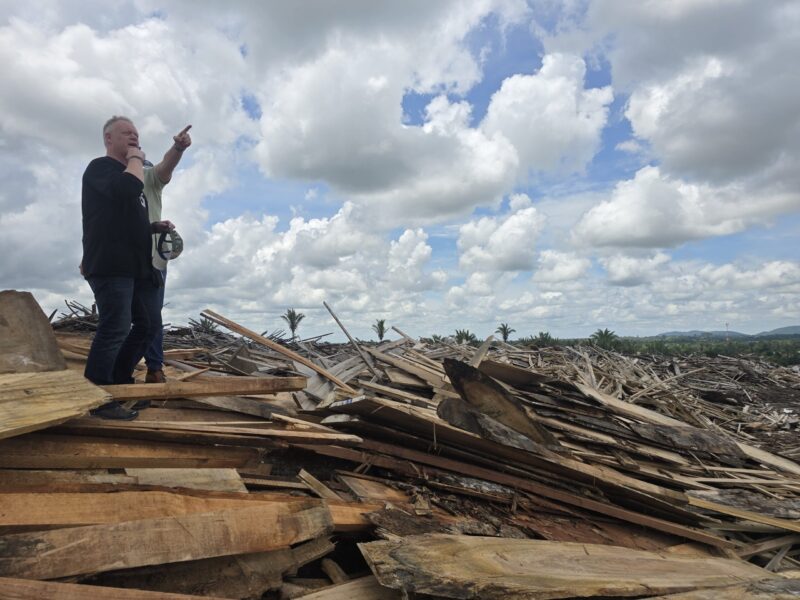
That burning is not a hypothetical. It is happening right now in the areas around facilities that aren’t yet operational. When you stand next to a pile of waste wood that is actively smouldering and you understand that this is what the carbon credit is replacing, the additionality question answers itself fairly directly. This is not a complex counterfactual scenario. It is a before-and-after you can observe on the same road, in the same afternoon.
The other thing that struck me was the extent to which the facility location decisions are driven by biomass logistics – not the other way around. Diego Justiniano Pinto, the CEO of Exomad, explained it to me in a way I found genuinely clarifying: before you think about the biochar production process, you need to map your biomass supply and your application market. The kiln sits in the middle. The facility at Guarayos, for example, was sited specifically because of the sawmill density in the surrounding area and the proximity to large agricultural land where the biochar would be applied. That is not the thinking of a company that has taken a shortcut on sustainability. That is the thinking of a company for which sustainable biomass sourcing is an operational requirement, not a compliance checkbox.
The sawmills supplying Exomad Green are certified under Bolivia’s national forestry oversight system, Autoridad de Fiscalización y Control Social de Bosques y Tierra (ABT). This means the residual biomass used for biochar comes from supply chains subject to formal forestry controls and sustainability requirements.
The carbon permanence question
Biochar’s claim to carbon permanence is one of the things that makes it a genuinely exciting technology in the context of carbon markets. Unlike nature-based solutions, where the question of what happens if the trees burn down is a real and difficult one, biochar produces a physically stable form of carbon that, once incorporated into soil, is measured in centuries.
I want to be careful here, because I think it is important not to overstate the certainty of the science. As with all emerging technologies in the carbon credit space, there is ongoing scientific development in how we measure and model biochar permanence, and methodologies need to evolve with that science. That is precisely why Puro.earth reviews its methodologies every two years. We are intentionally cautious, and that’s why we decided to increase biochar durability to several centuries (CORC200+) in our updated methodology (Edition 2025), but not yet to millennia durability.
But the fundamental chemistry is solid. Pyrolysis converts labile carbon – the kind that would decompose relatively quickly and return to the atmosphere – into recalcitrant carbon that is chemically resistant to decomposition.
When you hold a handful of Exomad’s biochar, you are holding material that, barring extraordinary circumstances, will still be in that soil in 500 years. For the carbon market to function with genuine integrity, it needs this kind of durable sequestration. Biochar delivers it.
The impact question: what good does biochar achieve on the ground?
I want to spend some time on this one, because I think it is where the gap between what people understand about biochar and what is actually happening in the field is largest.
The most immediate impact in the communities around Exomad Green’s facilities is on health. Waste wood burning is a significant source of particulate air pollution. In towns like Concepción where the facility has been operational for some time, you can see the numbers: reduced respiratory illness, reduced healthcare costs, improved health outcomes especially for children and elderly residents. These are documented.
The numbers are one thing. Standing next to a smoke plume coming off burning waste wood and understanding that this is what the project eliminates – that is a different kind of understanding.
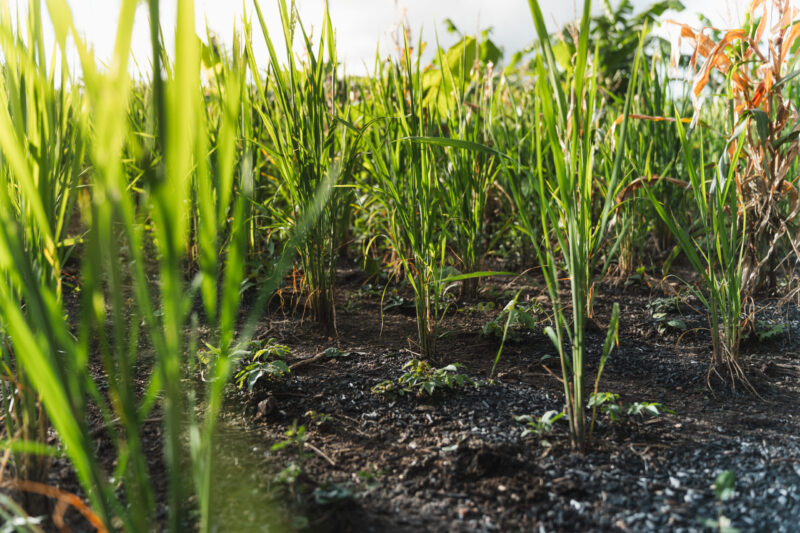
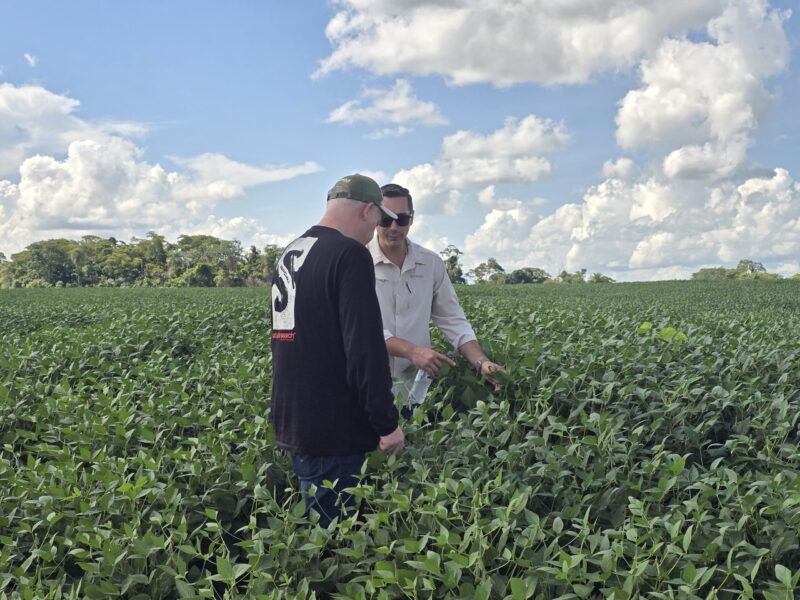
The agricultural impact is equally tangible, though it operates on a slightly longer timescale. Biochar applied to soil improves water retention, increases the availability of nutrients to plant roots, and supports microbial activity. For large-scale farmers in the region, this translates into measurable yield improvements. For indigenous smallholder communities growing rice and vegetables, it translates into food security – into whether a community can grow enough to eat, every year.
I visited someof those communities. I saw the difference in the soil colour between plots where biochar had been applied and adjacent plots where it had not. I talked to people about how it had changed their farming. You can read about this in a case study or news reports. But it is very different to actually hear about it on the ground.
The scale question
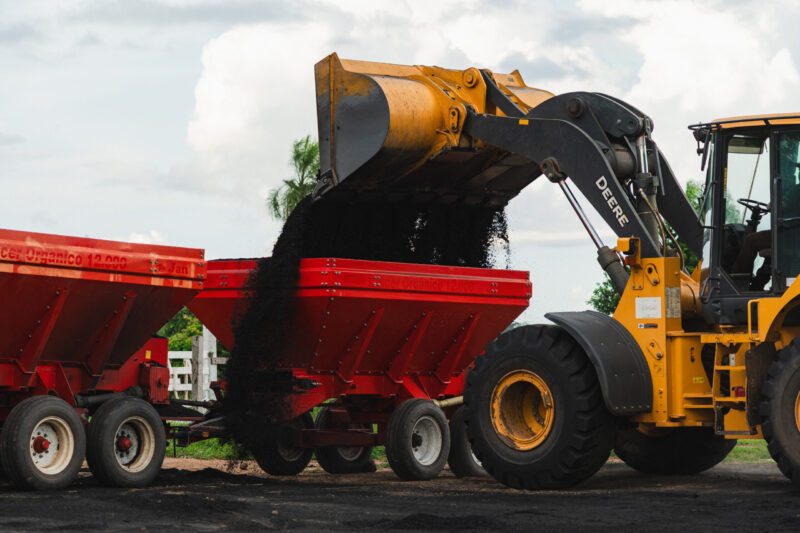
This is the question that I think the Guarayos site answers most directly. What Exomad Green is building there is the largest biochar facility in the world. It will dwarf what is currently operational in Concepción and Riberalta. Walking around a construction site of that size, with that ambition, in that context, you understand that the question is no longer whether biochar can scale. The question is whether the market infrastructure – the registries, the certification systems, the financial instruments – can keep up.
At Puro.earth, we are working on exactly that. The innovations supporting on-demand issuance we are developing, the work we are doing to make certification more bankable, the API infrastructure we have built for real-time data verification – all of it is designed with operations like Exomad Green in mind. Because a facility issuing 20,000 CORCs a month, heading towards significantly more, cannot operate on the timeline of an annual audit.
What changed for me after my trip to Bolivia
I arrived in Bolivia thinking I had a fairly complete picture of how biochar projects work. I left with a more accurate one.
The sustainability of the biomass is demonstrable. The permanence of the carbon, measured in centuries, is as solid as anything we have in the engineered removal space. The impact on communities is real, specific, and in some cases profound. And the scale that is possible – the scale that is already being built – is genuinely remarkable.
The answers to the hard questions about biochar are not found in a methodology document. They are found on the ground. I would encourage anyone who has doubts about any of the above to go and see for themselves.
Jan-Willem Bode is President of Puro.earth, the world’s leading registry for engineered carbon removal. He visited Exomad Green’s facilities in Bolivia in 2026.
Join our community of climate pioneers
Join our community of climate leaders
Receive updates from Puro.earth, along with CDR market updates and intelligence. By subscribing, you agree to Puro.earth’s privacy policy.