

1 million biochar CORCs issued – and what comes next
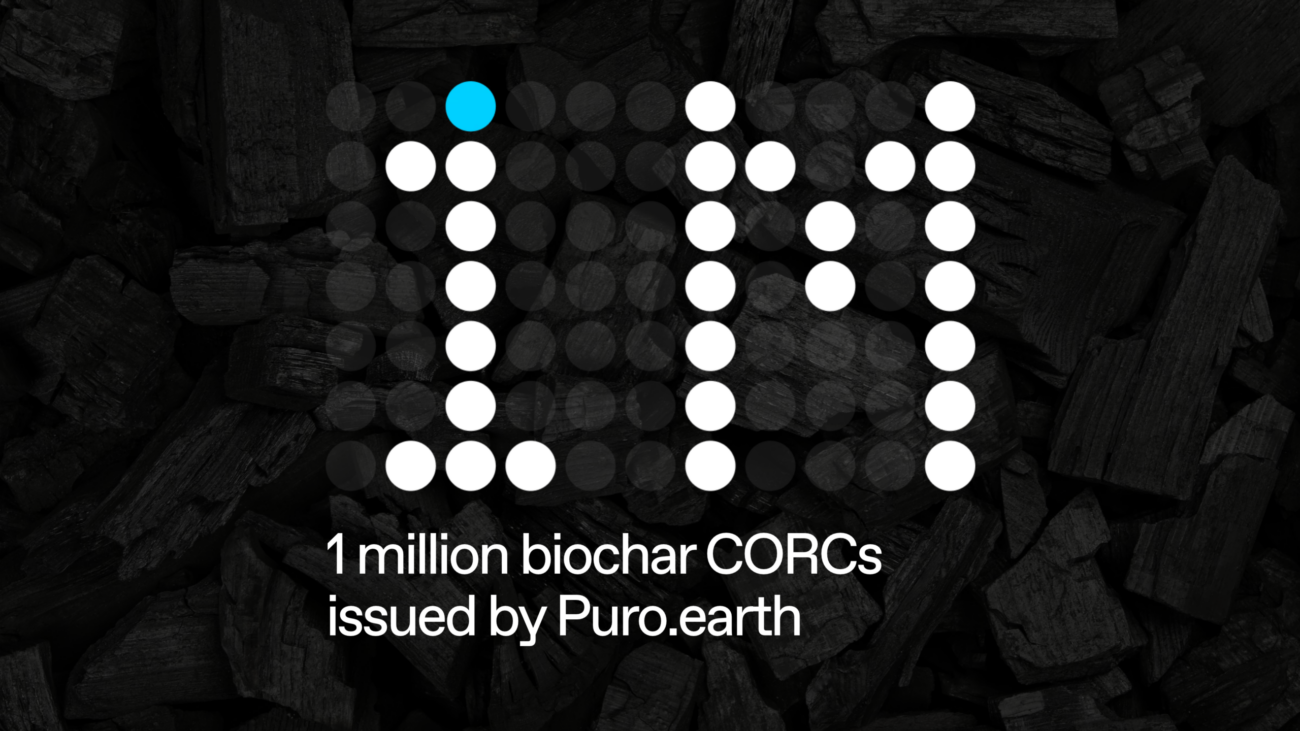
This week we celebrate one million biochar CO2 Removal Certificates (CORCs) issued to the market. That is more than a milestone for Puro.earth – it is evidence of a biochar CDR market maturing from future commitments to verified, repeatable delivery.
Every issued CORC represents a tonne of carbon dioxide removed from the atmosphere and independently verified against the Puro Standard. One million CORCs issued reflects the hard work of suppliers, buyers, independent auditors, and the team at Puro.earth to scale this market.
The engineered CDR sector has been built largely on long-term ambition and forward offtake agreements. Those commitments remain essential to financing new capacity, but ultimately, the market had to earn trust through performance and a track record of issuances. One million biochar CORCs is the best illustration that biochar credits can be trusted as a repeatable commercial process, and a reliable source of revenue.
The milestone also comes as the bar rises. Buyers now expect more evidence behind every credit. Biochar Edition 2025, our newest biochar methodology, reflects this approach with stricter rules on feedstock, durability and end use. The next generation of credits will be built on those rules, drawing on what we learned from our first million.
Repeatable issuance requires a robust infrastructure
I started out as a biochar developer, back when the carbon removal market was still finding its feet. Everyone – suppliers, auditors and standards – was learning at the same time.
That’s why this milestone feels personal. I know what it takes to get a project to its first issuance, and I’ve seen how much easier the path to revenue has now become. I joined Puro.earth to help make it clearer still – to bridge the gap between rigorous science and the reality of issuing credits, again and again.
Over the past several years, Puro.earth has worked to close that gap by developing dozens of biochar templates for CORC summaries, life cycle assessments, biomass sourcing documentation, and more. We’ve also published FAQs and formal clarifications, made our submission guidance clearer, and trained auditors. Connecting our biochar API with dMRV partners helped make audits more structured and efficient. Tierra Prieta in Mexico was the first project to benefit from the integration, in January 2026. The results are clear – we’ve been showing consistently lower issuance times throughout 2026, with some issuances taking place in less than a week.
As suppliers increase production, the certification systems and methodologies that govern their operations must be ready to grow with them. Frequent issuance and rigorous independent verification cannot become competing objectives. Our operational work may be less visible than a new methodology or a major purchase announcement, but it is what makes every issuance possible at scale. We’ve built the engine for that – one that biochar suppliers and buyers can trust.
Today, 79 biochar facilities across 27 countries are listed and have issued CORCs in the Puro Registry. The pipeline is growing too: a further 24 facilities have passed Preliminary Assessment. As they move towards certification and issuance, they’ll help build the next million.
Trust is the foundation of carbon credits, and it’s built through quantifiable, repeated evidence – not just promises. Our biochar methodology sets the rules. But it’s Puro.earth’s infrastructure, our suppliers and our partners that have made it scalable and verifiable. We are all co-creating the CDR industry together with the suppliers and auditors who put the rules into practice every day and run operations they can be truly proud of.
To the brokers, buyers, auditors, dMRV partners, and everyone else who helped make biochar one of the fastest-growing durable CDR pathways, thank you. This milestone belongs not just to Puro.earth, but to the whole international biochar CDR community.
Unlocking future financing
What does a milestone like this mean when it comes to demonstrating the bankability of our biochar ecosystem?
For many project developers, one of the greatest obstacles has always been access to financing. They need capital to build or expand a facility, but investors and buyers often want to see a certified or preliminarily assessed facility – or even the first issued credits – before they are ready to invest. Our preliminary assessment launched in 2024 aimed at helping pre-operational facilities get off the ground – and it was a powerful tool to have when discussing with buyers or financers. Many developers use offtake agreements to unlock project financing, making confidence in future issuance essential.
For operational facilities, predictable issuance can improve cash flow, strengthen commercial negotiations, and give investors a track record they can evaluate. A project that consistently delivers is easier to finance, and more trusted, than one offering forecasts alone. A market that can demonstrate a proven track record, a reputable standard and frequent CDR issuers will attract the investment needed to scale.
Exomad Green best highlights and illustrates how predictability and experience are built. Its first audit cycles were naturally demanding. Requirements had to be understood, evidence systems established, and the working relationship among the supplier, auditor and Puro.earth developed closely over time. With clear expectations and repeated practice, verification became embedded in normal operations, allowing subsequent audits to move more efficiently and predictably.
The lesson is not that verification becomes easy; CDR science always pushes for higher requirements, evidence and transparency. However, it starts to become repeatable. That gives buyers greater visibility into delivery timelines and gives suppliers a more credible basis to predict growth. The projects most likely to succeed will build operational discipline and carbon-credit sales capability as CDR enters its new phase: The Delivery Era.
Latin America – a regional leader
This new era has been defined by a regional leader: Latin America. When I first entered the industry, many people expected the Americas to lead the growth of biochar. They were right – but it wasn’t North America. Latin America is not waiting for the carbon removal market to arrive – it is building it.
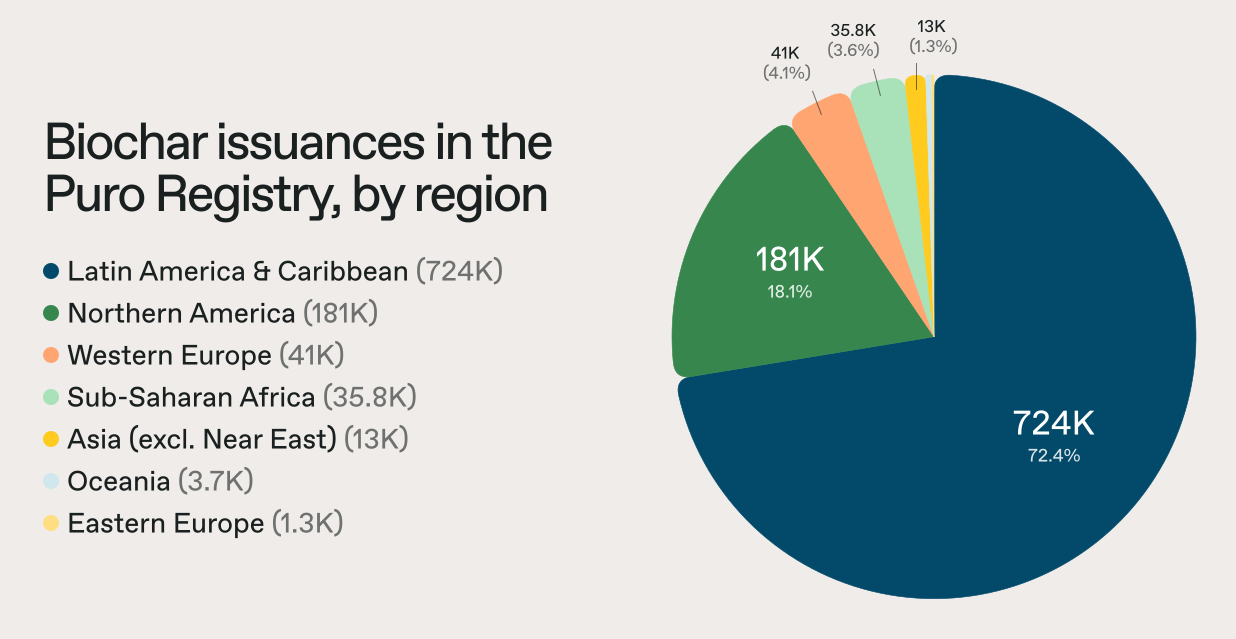
The region has many ingredients needed to lead: significant biomass residues, established agricultural and forestry value chains, and strong local entrepreneurship. Well-designed biochar projects can create value from underused residues while attracting investment and skilled employment to regions rarely at the centre of climate-finance conversations.
Feedstock availability alone is not a strategy. Developers must track where every batch of biomass comes from, prove it comes from sustainable sources, show what would happen to it if it weren’t used for biochar, and document how it moves through the project. Under the new methodology, that means declaring every biomass source upfront and linking every delivery to one of them. Logistics can be complex, local conditions vary, and access to capital remains a challenge. That is precisely why proven deliveries – and a certification system capable of supporting them repeatedly – matter.
What the next million will require
The next phase of biochar carbon removal will not be defined by capacity announcements alone. It will be defined by dependable issuance across a greater variety of projects, regions, and buyers. Demonstrating rigor, and being able to hold up to buyer scrutiny will be paramount.
Buyers and investors will rightly ask more detailed questions about feedstock sustainability, measurement, traceability, and long-term performance. Standards will continue to evolve as the sector learns and the science improves, while policy and voluntary frameworks will continue to shape what buyers need from CDR. These developments can expand demand, but they will also raise expectations – and that is positive.
We’ve already started raising the bar. Our new biochar methodology turns what buyers are asking for into clear, independently checked rules. CORCs now represent storage over several centuries (CORC200+), and biochar is tracked until it reaches its end user in a range of scenarios. Every new facility is certified against it, and over time all biochar CORCs will be issued under it.
The bar is higher, but achievable. Suppliers are going through their first audits under this methodology right now, preparing evidence for every biomass source and every batch. Like any first audit, these cycles come with a learning curve. We’re improving our templates, guidance and digital tools to make each cycle more predictable.
Trust is earned one tonne at a time. Each tonne of carbon removal has to be produced, measured, and independently verified against rigorous standards before a CORC can be issued and delivered to a buyer. That’s no easy feat. One million biochar CORCs issued is worth celebrating. It shows that the market works and that the infrastructure we built can support it at scale.
The task now is to make it accessible to a much larger group of suppliers, buyers and financiers. For now, let’s celebrate – and take a moment to congratulate the international biochar community on this milestone. Here’s to the first million of many!
Join our community of climate pioneers
Join our community of climate leaders
Receive updates from Puro.earth, along with CDR market updates and intelligence. By subscribing, you agree to Puro.earth’s privacy policy.