

Opinion: How The Revamped SBTi Standard Reinforces The Dual Purpose Of Biochar In Companies’ Supply Chains

A new kind of buyer has arrived in the carbon removal market. Not the technology giants and financial institutions that dominated early demand and remain important purchasers, but Food and Beverage companies (F&B) and Fashion houses.
These are companies whose emissions are rooted in the land and natural products, and whose climate targets cannot be met merely through emission reductions at their warehouses and processing facilities.
The scale of that challenge is easy to underestimate. Take some of the largest food and beverage companies – think Nestlé, Danone or Mondelēz. They all sit at the head of vast, dispersed sourcing networks, working with hundreds of thousands of farmers and well over a hundred thousand suppliers across scores of countries. This represents a vast and distinct Scope 3 challenge.
Since the SBTi Corporate Net-Zero Standard v2.0 was published in June, we have heard from many food, beverage, but also fashion firms exploring the same question: how to inset carbon removal into their own supply chains, using pathways ranging from enhanced rock weathering to soil carbon – but, above all, biochar. For a growing number of them, that is where their CDR strategy now begins.
But why now?
Insetting is now in the standard
The change that has focused their attention is structural, not cosmetic. SBTi’s latest standard introduces the Ongoing Emissions Responsibility (OER) framework, formalising the expectation that companies take responsibility for the emissions they continue to produce while they decarbonise. Crucially, the standard now explicitly recognises ‘landscape or other agricultural interventions within a supply shed’ as valid actions toward Scope 3 targets. In plain terms this means that interventions inside a company’s own sourcing geography count, signalling that insetting has moved from the margins into the standard itself.
But why has it sharpened attention on carbon removal in particular? Because v2 does something the previous standard did not, making removals a required, escalating part of reaching net zero, not an optional extra bolted on at the end. Companies must neutralise a rising share of their ongoing emissions with removals – starting modestly, but climbing to full coverage by their net-zero year – and a defined portion of that must come from durable, long-lived methods such as biochar and enhanced rock weathering. In addition, biochar projects really are part of supply chains of these companies, so biochar credits can also be seen as insets.
For the land-sector companies caught by SBTi’s separate existing Forest, Land and Agriculture (FLAG) guidance, the point is sharper still: offsets cannot count toward near-term targets, so the only credits that move the needle are removals generated inside the supply chain. For these companies, this is what has turned CDR from an optional climate solution to deploy, to a procurement question with a deadline.
For many of these companies, the economics have shifted too. Internal abatement – reformulating processes, switching energy sources, overhauling agricultural practices at scale – is expensive and challenging to deploy, and for a large share of residual emissions the cost of abating the next tonne internally now exceeds the cost of a high-integrity removal credit. Removals deployed inside the supply chain let companies act on emissions they cannot yet eliminate, while they build the operational changes that will reduce them over time.
For food and beverage companies, the bulk of the footprint comes from the crops, dairy and commodities they source. For fashion, it is the cotton fields, the leather supply chains and the land upstream of every garment. These are precisely the value chain emissions that cannot be engineered out at the corporate level – they have to be addressed on the land itself.
Insetting brings challenges of its own, though, and most companies are only beginning to confront them. Having spent years focused on buying credits from outside the value chain, relatively few firms have built the internal awareness, supplier relationships or clear guidelines that insetting requires.
Closing that gap means raising understanding around insetting both internally, across procurement, sustainability and finance, and externally with the farmers and suppliers who deliver the products. These firms must set a coherent strategy that treats insetting as a core part of a company’s decarbonisation journey – a topic that, after years in offsetting’s shadow, has become critical to reaching net zero.
Why biochar works as an insetting pathway
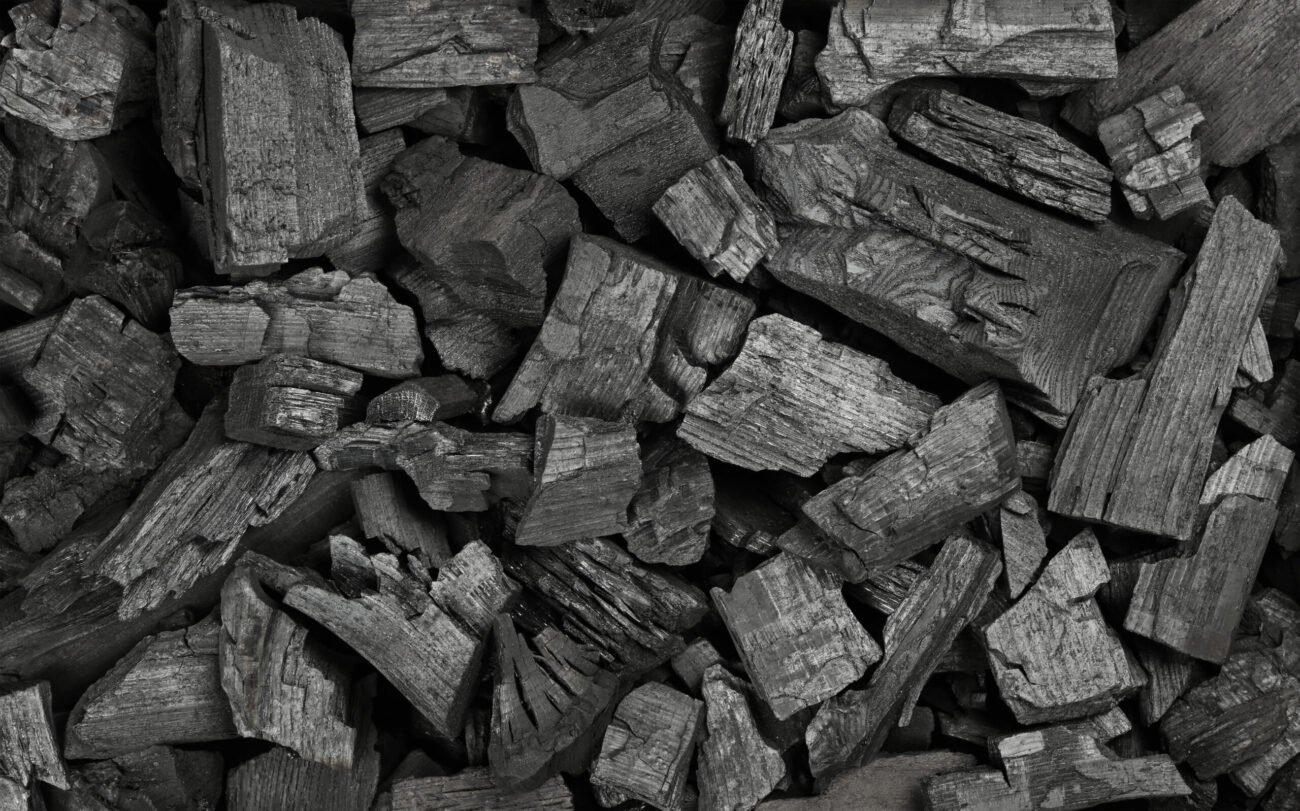
Biochar is the logical place for many of these companies to start. Crushed and worked into farmland, that same material presents durable carbon removal qualities while feeding the soil. It delivers better water and nutrient retention, more stable structure, less reliance on fertilisers, and yield uplifts of 10-20% in some cropping systems, particularly in tropical soils.
A company sourcing cocoa, coffee, cotton, grain or sugar is therefore buying a carbon removal that also makes the farms it depends on more fertile and more productive. Some early cocoa insetting programmes are already reporting exactly that: higher yields and lower fertiliser use on participating farms. In Bolivia, Exomad Green found in field trials that a single application lifted corn yields by 15% and bean yields by 13% – rising to 32% and 25% respectively when paired with fertiliser and soil microbes.
Fashion’s cotton supply chains are moving the same way. Better Cotton, which licenses around a fifth of the world’s cotton farmers, has partnered with the biochar developer Planboo to turn cotton stalks into biochar returned to farmers’ fields – explicitly to cut Scope 3 emissions.
The buyers we speak to in the F&B and fashion sectors frame the decision as resilience, not compliance: a more sustainable supply chain is a more durable business, and investing in the land they source from is investing in their own continuity. The pressure to act comes from shareholders – but increasingly from employees who expect their employer to lead, and from the customers, suppliers and communities whose confidence underpins a brand.
Why waiting is the risk
Timing is critical for potential buyers of CDR credits for insetting purposes. The OER framework becomes mandatory for the largest companies from 2035 – but meeting that obligation requires engaging with the voluntary carbon market at a minimum from five years out to allow time for project origination through to issuance.
These timelines mean the pipeline a company will draw on from 2030 onwards has to be originated now. Waiting until 2034 to start is waiting until it is too late: the highest-quality supply will already be contracted, and prices will reflect the scarcity.
The companies showing up in the biochar market today understand this. They are not treating carbon removal as a distant compliance line item, but as a tool that does two jobs at once – meeting the requirements of an important demand standard, while building resilient supply chains that can withstand the climate-related pressures of the coming decade.
SBTi v2 did not invent that logic. It reinforced it – and, in doing so, made biochar’s dual purpose impossible to ignore.
This article first appeared in Carbon Herald on 28th July 2026
Join our community of climate pioneers
Join our community of climate leaders
Receive updates from Puro.earth, along with CDR market updates and intelligence. By subscribing, you agree to Puro.earth’s privacy policy.