

Supplier spotlight – How Inherit Carbon Solutions is delivering BECCS at scale through biogas
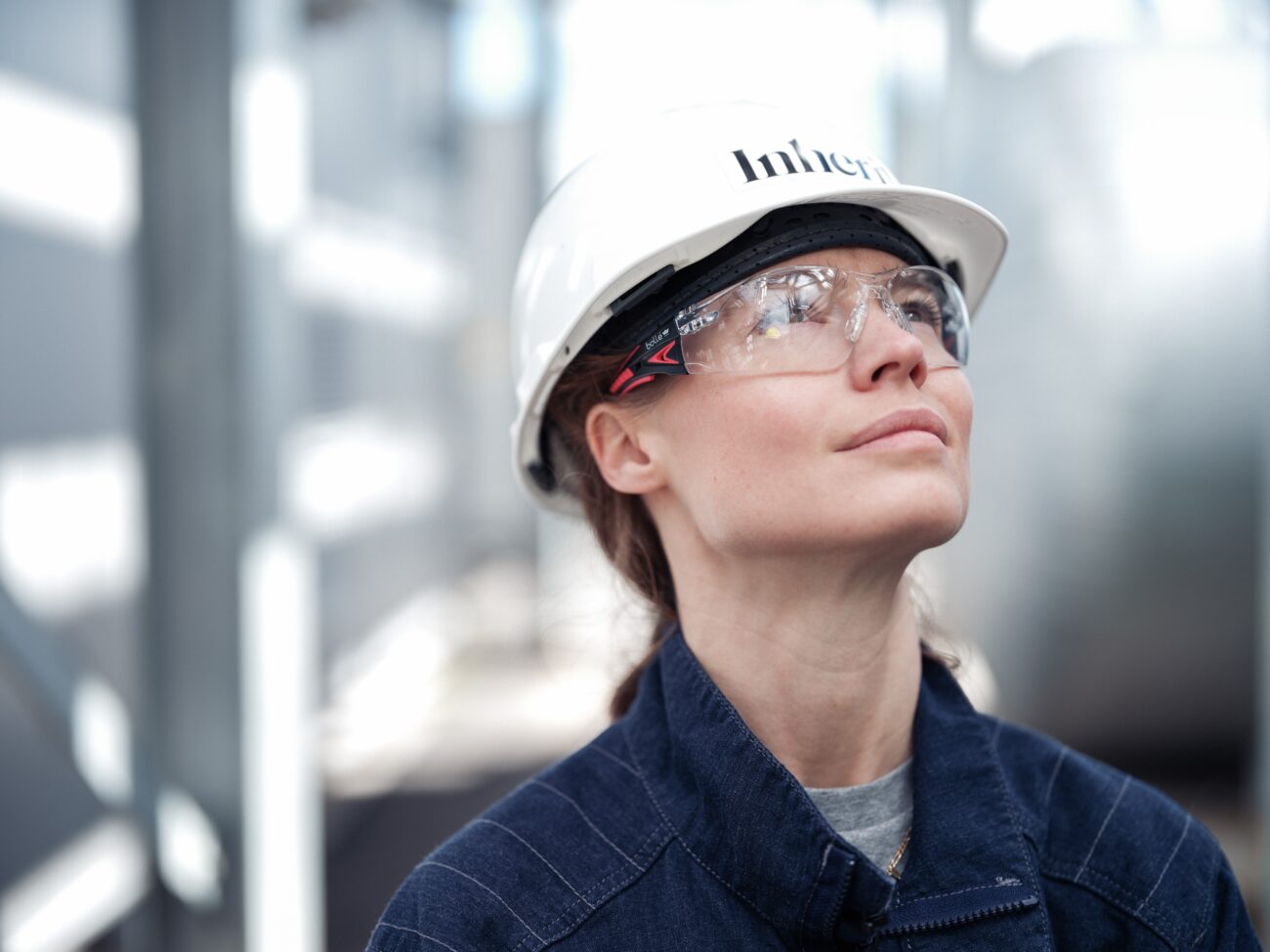
Inherit started as a project developer, not an operator – what does the company actually do day to day, and how has that role evolved since founding in 2021?
We started in 2021 by connecting two things that already existed: thousands of biogas plants venting pure CO2, and companies that needed verified removal. No one was connecting them.
Day to day now we do all of it, negotiate CO2 offtake with plant operators, build capture and liquefaction on site with partners, schedule trucks, run the MRV, sell CORCs and report to buyers. We became an operator the day the first truck left Veas in February 2026. We now know what the value chain actually costs and where it breaks, rather than what a model says it should cost.
When did CCS enter the picture for Inherit, and what made biogas the right entry point into BECCS?
I entered this sector with a biogas consulting background, and I initiated the first formal study of biogas plus CCS with the Norwegian Environment Agency.
Biogas is the obvious entry point because the hard part is already done for you: anaerobic digestion produces a near-pure biogenic CO2 stream as a byproduct when upgraded to biomethane. There is no separation from flue gas required, nor combustion, no new feedstock needs, and no competition for land. The CO2 exists whether or not anyone captures it, and today it is vented. What is missing is the logistics chain and someone to certify and sell the result. That is more a commercial problem, not a technology problem.
Why did you choose Puro.earth as your certification partner?
Three reasons. Puro had a methodology that worked for what we were looking to achieve: Geologically Stored Carbon. So we were not asking a registry to invent something for us.
Second, the buyers we wanted already trusted the registry. Microsoft, Nordea and DNV did not need us to explain what a CORC is, which really helped. Third, Puro is built for engineered removal specifically, which means the questions they ask are the right ones: chain of custody, measured tonnes, permanence. Our whole argument to buyers is “don’t pay for maybe”. That only works if an independent party checks every tonne from capture to seabed. Puro does that.
The first issuance from your VEAS project was recently announced. What does hitting that milestone represent – both for Inherit, and for a new Nordic BECCS industry more broadly?
There have been more than 700 CORCs from four months of operation, February to May 2026, and while this is a smaller number comparatively it sends a big signal.
It means the whole chain closed: capture at Veas, trucks to Øygarden, pipeline, injection at 2,600 metres, verification, issuance. Every individual step had been done somewhere before. Nobody had done all of them in sequence and had certified tonnes at the end.
For a Nordic BECCS industry it removes the excuse that this is a decade away. The infrastructure exists, the methodology exists, and credits have been issued against both. What is left is replication, and that is a much easier conversation.
What was the certification process actually like for the VEAS project – where did it get hard, and where did Puro support?
The hard part was not the science, but it was the boundaries – what counts, whose meter, which emissions we subtract. Biogenic CO2 from wastewater has a supply chain nobody had drawn before: sludge in, biogas out, CO2 captured at one site and stored at another, with a truck and a receiving terminal in between. Every handover needed a documented measurement and someone accountable for it.
Puro had worked the methodology through with us rather than handing it back, and pushed where our audit trail was thin and further detail was needed.
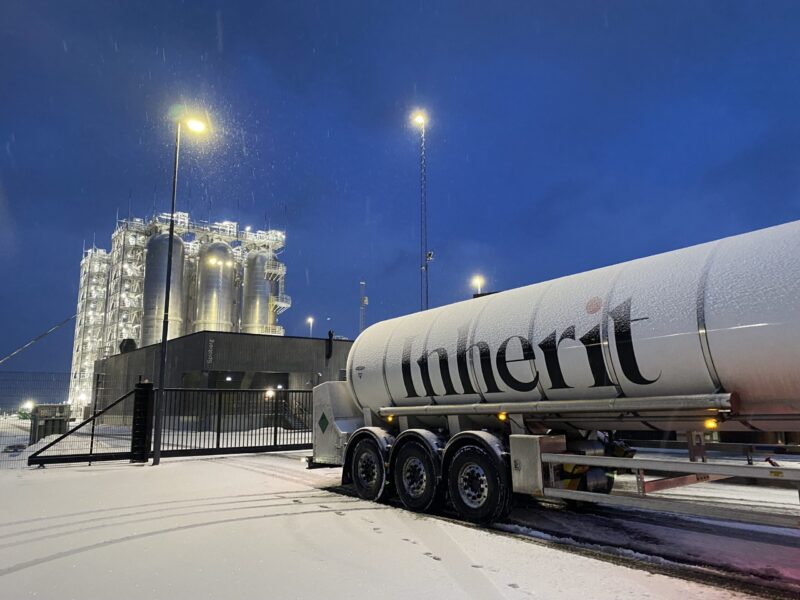
Walk us through the VEAS project – from the first truck to Øygarden to the first injection below the seabed. What did that milestone feel like operationally, and what happens next at the site?
Veas is Norway’s largest wastewater plant, serving more than 800,000 people. Its biogas unit produces CO2 that was vented for years. HoopCO2 captures and liquefies it on site. Litra trucks it, using biogas, to the Northern Lights receiving terminal at Øygarden. From there a 100-kilometre pipeline takes it to the Aurora reservoir, 2,600 metres below the seabed, where the first injection happened in March 2026. Operationally it felt less like a launch than a first iteration: its now about ongoing scheduling, quality certificates, and uptime.
Microsoft, DNV and Nordea has offtakes in place with you. How did these relationships come together, what has the partnership been like, and what does landing buyers of this calibre signal about demand for CCS?
They came together the same way, which was grounded in long technical diligence. Microsoft came first, DNV signed in 2024, and Nordea in March 2025 for at least 68,000 tonnes. Each of them ran our chain of custody, our storage arrangement and our counterparty risk hard before signing. That is what buyers of this calibre do, and it is good for the market as it sets a floor on quality.
What it signals is that serious demand has moved to delivered, permanent tonnes rather than portfolios of intent. These buyers were not looking for the cheapest credit, but were rather looking for one they could defend.
Your model works by coordinating plants, transport, storage and MRV. What will it take to scale that model across Europe’s other biogas sites, and where does Puro.earth fit into that?
There are three things we think are important. Plants willing to treat CO2 as a product rather than a waste stream. Storage capacity contracted ahead of supply, not after it. And a standardised way to certify each new site, so that replication does not mean re-litigating the method every time.
The first is a commercial conversation we have every week. The second is about infrastructure, and it is being built. The third is where Puro.earth matters most: if the methodology travels, a new site becomes an onboarding exercise rather than a new project. Europe has thousands of biogas plants venting pure CO2. The constraint is coordination, not molecules.
Tell us about the potential of Northern Lights – what does it mean for Inherit to be part of this initiative?
Northern Lights is the world’s first commercial CO2 storage infrastructure, and it takes the hardest part of our value chain off our balance sheet. We do not have to develop a reservoir, prove containment or carry the permitting. We buy storage.
This is what turns a project into a repeatable business. Our CSO Mike Carpenter helped design Northern Lights through Gassnova and our CTO Audun Røsjorde developed Longship, so we know precisely what we are relying on. Being an early user matters to them too. Our approach is the first taking biogenic CO2 from wastewater into that system, which shows it works for more than one type of source.
Does certification change the conversation with investors or lenders on projects like VEAS?
Yes, because it converts a story into a receivable.
Before issuance you are asking someone to underwrite a projection. After issuance you have verified tonnes, a registry record and contracted buyers at a known price. That is a revenue line a lender can actually model. It also settles the quality question early, which used to consume most of the meeting. Certification does not remove construction or operational risk, and I would not pretend otherwise. But the conversation was noticeably different once we could point at delivered tonnes. Earlier this year, we closed a NOK 40 million round with Sumitomo Corporation, Arkwright X, Farvatn Venture, Momentum Partners and Remove.
What’s your pitch to investors who are watching CCS/carbon removal closely but haven’t moved yet?
Don’t pay for maybe. Most of what you are shown in this sector is a plan with a timeline attached. We have a project that has been running since February 2026, with storage contracted, credits issued, and buyers like Microsoft, Nordea and DNV already paying. The technology is not experimental and the deployment risk is low – anaerobic digestion, liquefaction, trucks, a pipeline, a reservoir – all of which is proven. What is scarce is the coordination and the offtake, and that is where the value sits. If you are waiting for proof that BECCS works commercially, it exists. Come and see it.
Where do you see biogenic CO2 capture and storage fitting within the broader BECCS and engineered carbon removal landscape in Europe over the next few years?
Biogenic CO2 from digestion is the cheapest permanent removal Europe has available right now, because the capture step is nearly free, and the stream is already pure. It will not be the largest category forever. Big point sources and DAC will scale past it. But it is the one that can deliver real volume this decade without waiting for new technology or new energy supply. I think of it as the base load of European engineered removal – unglamorous, distributed across thousands of existing sites, and available now. Our vision is a sector taking more than a gigatonne a year out of the atmosphere by 2050.
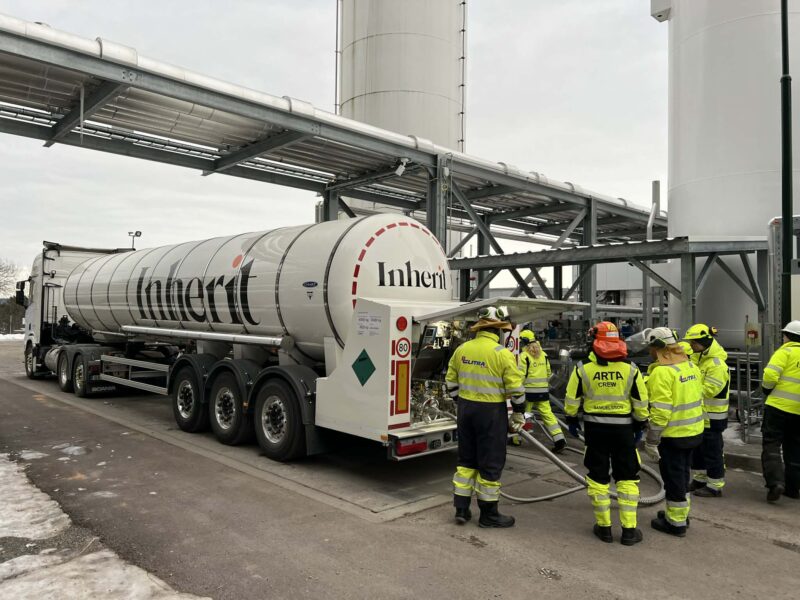
What’s next for Inherit?
More sites. We are sourcing biogenic CO2 across the Nordics and into Denmark and the Netherlands, and the pitch to operators is simple: commercialise your CO2. It is revenue from something you currently vent, with no change to how you run the plant.
Alongside that we ramp Veas and keep delivering against the contracts we have already signed. The unglamorous version of what comes next is doing the same thing again, in more places, without breaking anything. That is what scaling actually looks like in this industry, and it is what we have built the company to do.
Join our community of climate pioneers
Join our community of climate leaders
Receive updates from Puro.earth, along with CDR market updates and intelligence. By subscribing, you agree to Puro.earth’s privacy policy.